
Criminal Cases in the Marion County Courts
Marion County is West Virginia's Twentieth Judicial Circuit. Circuit Court is the trial court for felony prosecutions, while Magistrate Court hears misdemeanors and handles complaints, initial appearances, bond, and preliminary steps in felony matters. A Fairmont ordinance or limited traffic case can remain in Fairmont Municipal Court. Those venues keep separate dockets. A person who searches only one of them may find the first stage but miss the later result.
The official Marion County court directory identifies the judges and clerks who serve each court. It places Circuit Clerk Mary A. Allen at the courthouse and Magistrate Clerk Alicia Harker at the separate Jackson Street court. The directory image below shows why the court name and clerk matter when routing a records request.
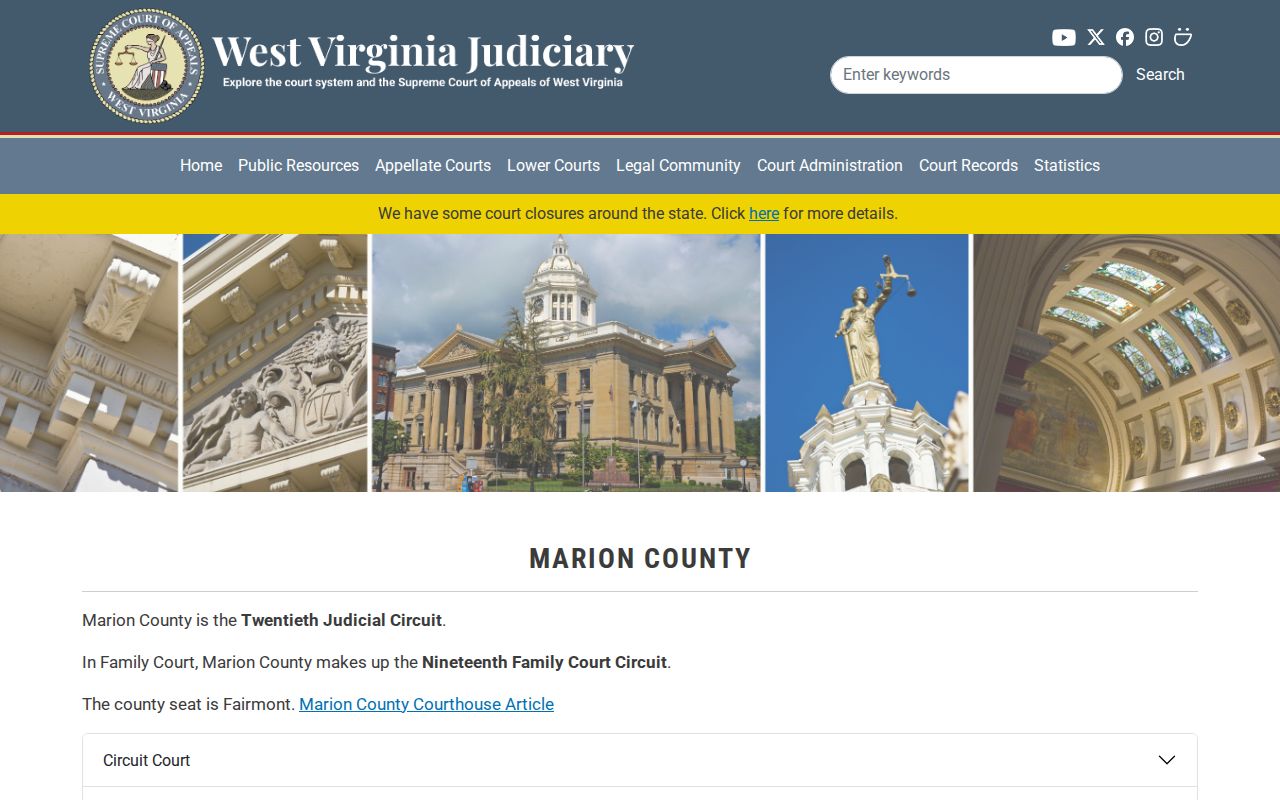
Use the clerk for the file, not a judge's chambers. The clerk can identify the docket, explain copy options, and provide a certified court record when the online view is not enough.
Start Marion Cases in MCR
Many Marion County criminal cases first appear in the Judiciary's free Magistrate Case Record Search, called MCR Search. After accepting its terms, select Marion County and search by a case number or party details. Confirm that the detail page says “Magistrate Court of Marion County.” Common names can return cases from other counties, and a name match alone does not establish identity.
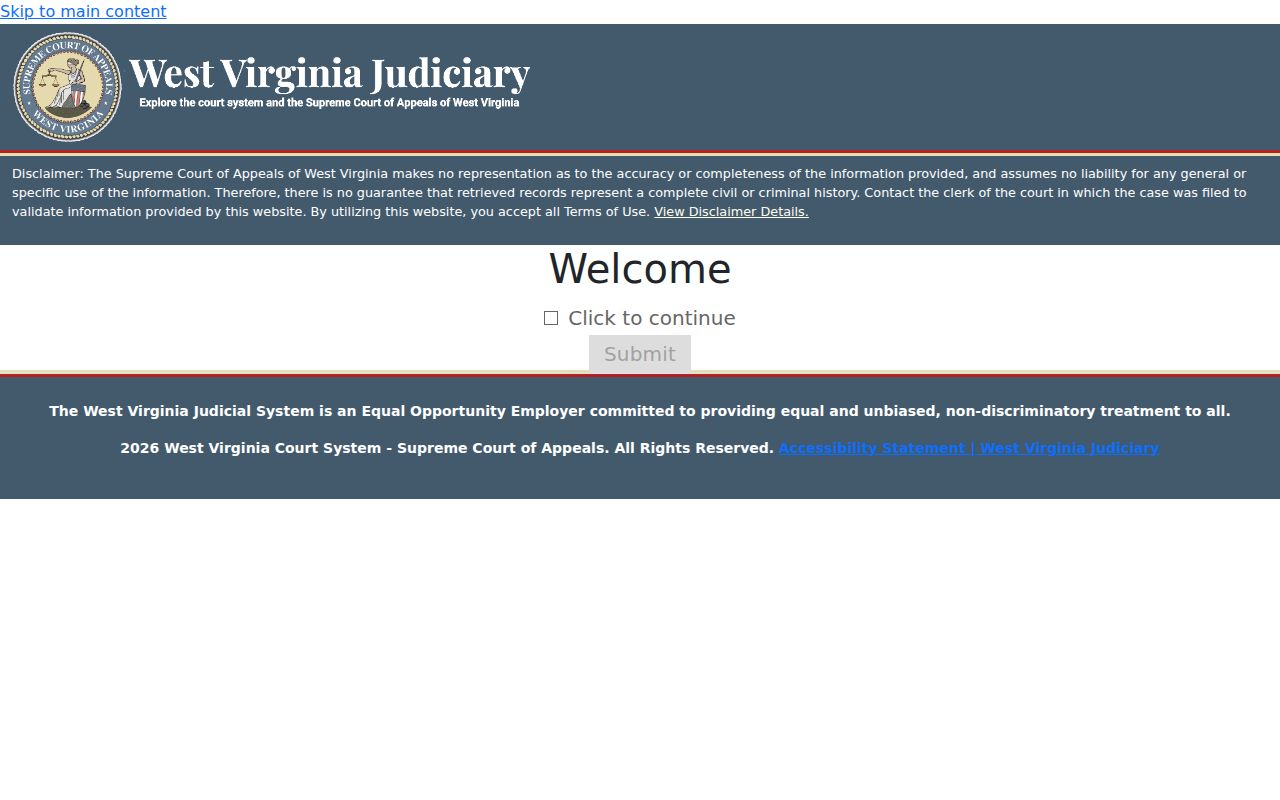
The result can show the case number, type, status, charges, statutes, plea, disposition, magistrate, hearing data, numbered docket events, and the reason a matter closed. MCR can cap a result set, so a broad name query is not a full criminal-history search. Use a known case number, middle name, or date criteria to narrow the result, then verify the record with the Magistrate Clerk at 304-367-5330.
How to Search Case Records
A sound Marion County case search follows the venue, not just the person's name. Keep both the Magistrate identifier and any later Circuit number. They may refer to the same prosecution at different stages.
- Open MCR Search, accept the terms, and choose Marion County.
- Enter the exact case number when known, or use a last name plus useful narrowing details.
- Open the detail and note the court, charge statute, status, latest event, and any transfer.
- If the case moved to Circuit Court, search WVPASS and call the Circuit Clerk with both identifiers.
- Request a paper, certified, or non-digitized copy from the clerk who holds that court file.
| Field Label | Type | Required | Use |
|---|---|---|---|
| County | Dropdown | For a local search | Choose Marion to avoid statewide noise. |
| Case Number | Text | No | Best route when copied exactly from a notice. |
| Last Name or Business | Text | For name route | Spelling controls the match set. |
| First and Middle Name | Text | No | Helps separate common names. |
| Date, Type, or Status | Date/select | No | Narrows results when that search mode offers it. |
Marion Circuit Cases After 1999
WVPASS changed remote access to Marion County Circuit Court records when it launched statewide in 2025. Registered users can search public Circuit Court cases and documents dated from July 1, 1999, forward. Account setup uses two-factor authentication. Searching is free, but public documents cost $0.25 per page. Downloads are uncertified, one document can be purchased at a time, purchase history lasts 30 days, and a session can end after 60 minutes of inactivity.
The Judiciary's WVPASS portal provides that circuit-level search and document path.
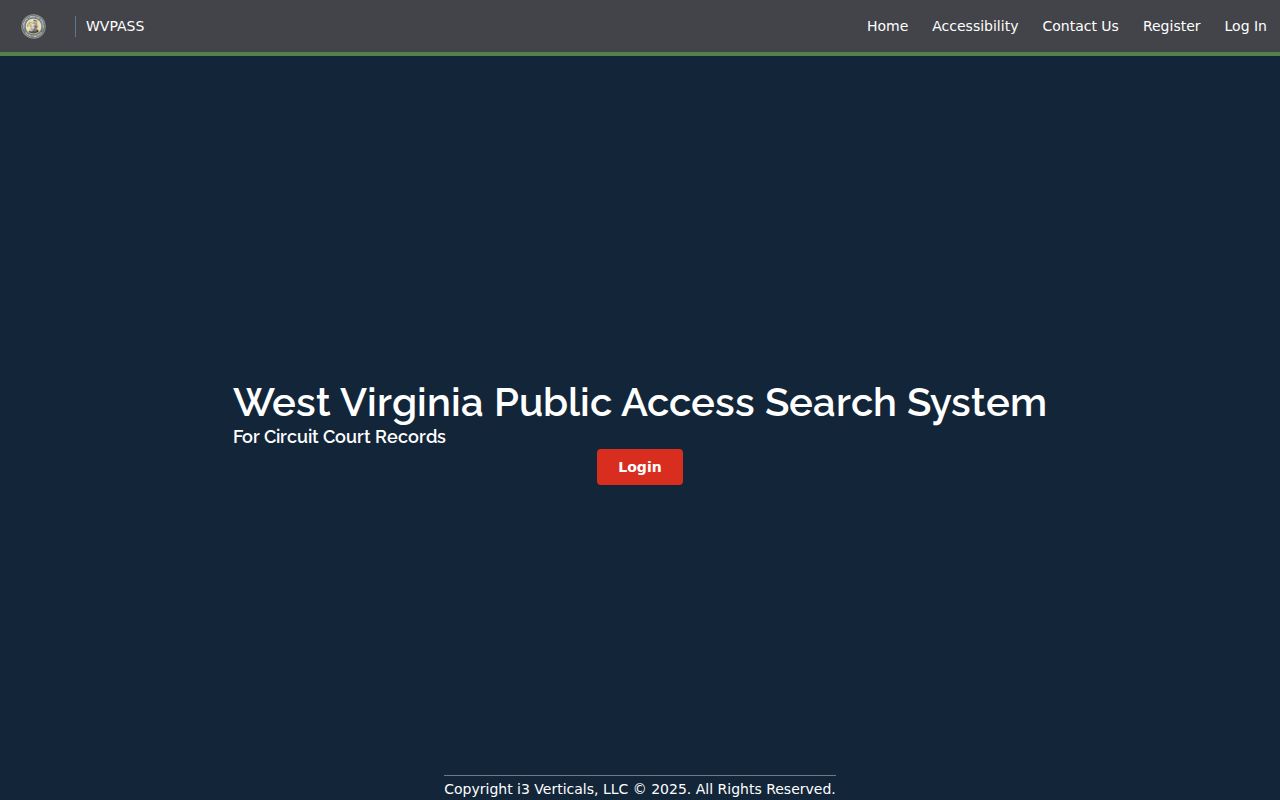
The date cutoff is a boundary, not proof that an older Marion County case does not exist. For a pre-cutoff case, a paper-only item, or a certified copy, contact the Circuit Clerk in Room 211. No official Marion County court copy-fee schedule was located, so ask for the current search, copy, certification, payment, and delivery terms before ordering.
What the Case File Shows
A Marion County court file records the prosecution in one venue. It is not the same as the arresting officer's full narrative or a statewide fingerprint record. Read the file charge by charge because one count may be dismissed while another reaches a plea, trial, or sentence.
| Case Number & Court | Identifies the venue and docket; a transferred felony may gain a Circuit Court number. |
|---|---|
| Charging Document | Shows the complaint, indictment, or other filed accusation and cited law. |
| Docket Entries | Lists filed orders, motions, hearings, and other events in sequence. |
| Hearing Dates | May show date, time, room, judicial officer, and hearing purpose. |
| Disposition & Judgment | Records the outcome for each charge, such as dismissal, acquittal, plea, or conviction. |
| Sentence & Conditions | Can record confinement, probation, restitution, or other terms imposed by the court. |
Public Magistrate details may also show bond data, plea, closure reason, and transfer events. Public financial values and documents do not appear in every case. Sensitive identifiers are restricted even when the rest of a docket is open.
Certified Marion Court Records
Online images are useful for quick review, but an official certified record comes from the court clerk. The Judiciary's public document access information explains that Circuit Court documents can be available online for a nominal fee while clerks remain the source for court records.
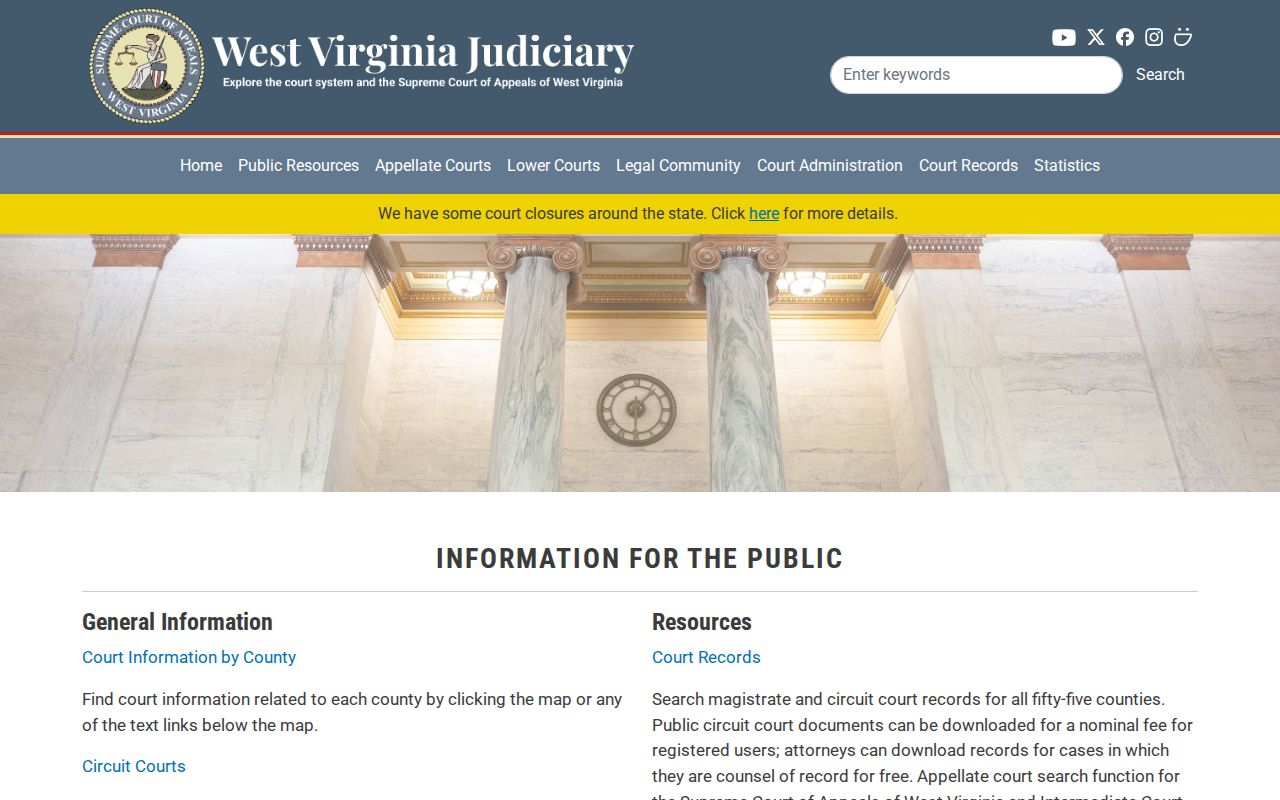
For a Marion County felony file, contact Circuit Clerk Mary A. Allen at 219 Adams Street, Room 211, Fairmont, WV 26554, or call 304-367-5360. For a misdemeanor or preliminary felony record, contact the Magistrate Clerk at 200 Jackson Street, Room 211, Fairmont, or call 304-367-5330. Give the clerk the court name, exact case number, party name, and the document needed. Ask whether the file is online, paper-only, sealed, or held by another venue.
Stages of a Criminal Case
A Marion County case often begins with a complaint or citation. Magistrate Court conducts an initial appearance and addresses rights, counsel, and bond. A misdemeanor can continue there through motions, a plea or trial, judgment, and sentence. A felony receives its early processing in Magistrate Court, then may move to Circuit Court after waiver or a preliminary finding and grand-jury indictment.
Case flow: Charges Filed › Arraignment › Pretrial › Plea or Trial › Disposition › Sentencing
In Circuit Court, the docket can then show arraignment, discovery, motions, plea talks or trial, sentencing, and a possible appeal. There is no single fixed time for each stage in the Marion County research. Read dates from the actual docket and confirm the next setting with the clerk rather than estimating from a generic timeline.
Marion Case Transfers Are Not Verdicts
A transfer to Circuit Court means the felony track continued. It does not mean the person was convicted. The later Circuit docket must be checked for an indictment, plea, dismissal, trial result, and sentence. Likewise, a complaint is an accusation, an arraignment states the charge and takes a plea, and a disposition is the recorded outcome. A dismissal ends a charge without a conviction on that count, while an acquittal is a finding of not guilty.
West Virginia also does not use a universal Class A, B, or C felony ladder. The particular offense statute supplies the punishment. In Marion County case records, use the statute and charge text instead of assigning an invented class. When a Magistrate entry says transferred, keep its number and use it to locate the related Circuit Court file. That link is more reliable than guessing from a name alone.
Access & Restrictions
West Virginia favors access to government records, but court access follows Judiciary rules and confidentiality laws as well as the West Virginia Freedom of Information Act. Juvenile matters, sealed or expunged cases, protected victim information, full personal identifiers, and some investigative material may not appear publicly. A missing online result can also mean an old paper file, a different court, a recent event that has not posted, or a transfer under a second number.
Ask the correct clerk to distinguish those causes. WVFOIA generally requires a proper written request to receive a response within five business days, excluding weekends and legal holidays, but that is not a promise that all records will be produced within five days. For a court order that will be used in a personal legal or administrative matter, request certification rather than relying on an uncertified download.
Marion Court Files Exclude Some Reports
The docket and the police report answer different questions. A Marion County court file shows filed charges, court events, orders, outcomes, and sentence. The arresting agency's incident or arrest report can contain the officer's narrative, alleged time and place, witnesses, evidence, and transport details. That full report is not guaranteed to become a public exhibit in the court file.
Request a sheriff-created narrative from the Marion County Sheriff's Law Office Records Clerk at 304-367-5307. Fairmont Police records use 304-366-9280, press 1. A trooper-created report stays with the relevant West Virginia State Police office. If the goal is to follow the booking itself before reviewing filed charges, the county's arrest-history channels explain how custody, agency reports, and court records connect. Keep the source record and court disposition together so an allegation is not mistaken for the final result.