
How to Check Criminal History in Fairmont
A Fairmont criminal history search works best when the question is defined first. A police narrative, a city citation, a state charge, and a jail booking are separate records. Fairmont Police is the source for a report created by its officers. Fairmont Municipal Court is the city channel for ordinance and limited traffic matters. Marion Magistrate Court is the first court stop for state misdemeanors and many felony complaints. Circuit Court holds an indicted felony file. The West Virginia State Police repository is a fingerprint system for a person's own review, not an open public name search.
- Call Fairmont Police Records and identify the incident by report number, date, place, and record type.
- Check Fairmont Municipal Court when the matter involves a city ordinance or qualifying traffic citation.
- Search the Magistrate Case Record Search for state charges filed in Marion County.
- Use WVDCR Offender Search for current or recent regional-jail custody, then WVPASS if a felony moves to Circuit Court.
- For review of your own fingerprint-supported West Virginia history, follow the WVSP Form 136A process.
Use exact identifiers at each step. Similar names do not establish identity, and the wording of a booking charge may differ from the charge a prosecutor files. For wider county routes, the Marion County criminal history overview explains which custodian answers each kind of request.
Fairmont Police Records on Quincy Street
The Fairmont Police Department works from 500 Quincy Street, Fairmont, WV 26554. The main number is 304-366-9280, with press 1 for Police Records, press 3 for Municipal Court, press 4 for Detectives, press 5 for the Drug Task Force, and press 6 for Administration. Dispatch answers at 304-366-4200 or 304-366-4201 around the clock. Posted office hours are Monday through Friday, 8 a.m. to 4 p.m. This routing matters because a Fairmont report belongs at the police records desk, not at the county Circuit Clerk.
The official Fairmont department directory shows the contact path for police records and Municipal Court.

The directory image reinforces a key Fairmont records lesson: one city telephone system routes several distinct custodians, so the caller should choose the office tied to the requested document.
The Fairmont Police Department
Fairmont Police creates incident, offense, arrest, and crash records for events its officers handle. A useful request names the record rather than asking for a broad criminal history. Supply the report number when known, or give a narrow date and time range, location, and incident type. Ask whether electronic delivery is available and request an advance cost estimate. The research found no dedicated city web request form or current Fairmont fee schedule, so the records telephone line and counter are the verified starting points.
If a written request is needed, describe it under the West Virginia Freedom of Information Act. Ask for reasonably segregable portions when some material must be redacted. Fairmont may protect victim or juvenile identities, personal identifiers, confidential sources, investigative methods, and material tied to an active investigation. Those limits do not make the public portion of every report unavailable. A requester can ask the city to identify the legal basis for a denial and to release the rest.
Fairmont Criminal Records Downtown
Fairmont is both a city and the Marion County seat. That makes its records geography unlike the other local city pages. City police work from Quincy Street, while county court and justice offices cluster along Adams, Jackson, and Monroe Streets. The Circuit Clerk is in Room 211 of the Marion County Courthouse at 219 Adams Street. Magistrate Court is at 200 Jackson Street. The sheriff's Law Office and county probation are in the Jacobs Building on Monroe Street. A short distance on a map can still separate four legally distinct files.
The official City of Fairmont portal provides the city-government source for Fairmont offices and services.
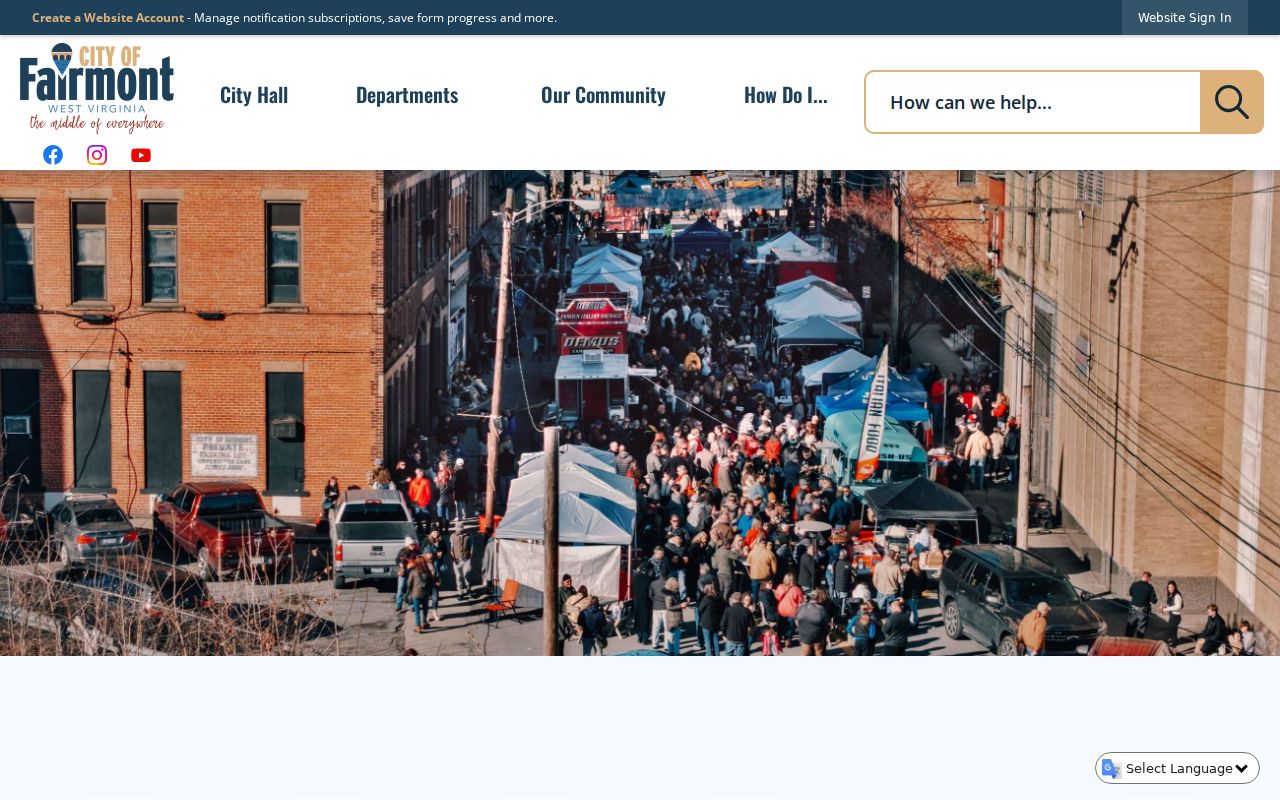
The city image places Fairmont records in their municipal setting, while the addresses above show why a city report and a county case file must be requested at different counters.
A person tracing one event should keep the Fairmont incident number, Magistrate case number, and any later Circuit case number together. That small record trail prevents the common error of treating a transfer entry as the final result. It also helps a clerk locate older or non-digitized material.
Arrests and Bookings in Fairmont
Fairmont has no verified city jail that publishes an independent roster. After a custodial Fairmont arrest, the police report remains with Fairmont Police, but intake data is created in the West Virginia regional-jail system. North Central Regional Jail and Correctional Facility generally receives Marion County arrestees. WVDCR Offender Search separates Jail Search from Prison Search and also provides daily admissions and releases. Jail Search fits recent pretrial custody; Prison Search fits sentenced state custody after a transfer.
An official booking entry may show a display name, Offender ID, status, descriptors, facility, admission date, committing county, and received charge. It does not prove guilt. Release, transfer, bond, dismissal, or a court order can change the entry quickly. For the charge, bond order, and later outcome, consult the Magistrate or Circuit docket. The more detailed Marion County arrest history route covers every official custody and report channel.
Record trail: Fairmont Police report › WVDCR booking › Marion Magistrate docket › Circuit docket when transferred.
Fairmont Campus Criminal Records
Not every police event inside Fairmont begins with the city department. Fairmont State University Police handles campus-created reports and maintains a Daily Crime Log. The latest 60 days are available through University Police on the first floor of Pence Hall. Older entries are made available within two business days, and the log is retained for seven years. Its fields include the nature, date, time, general location, and disposition if known. That log can identify an event, but it is not the full police narrative or a court outcome.
The Fairmont State University Police page is the official source for campus public-safety contacts and services.
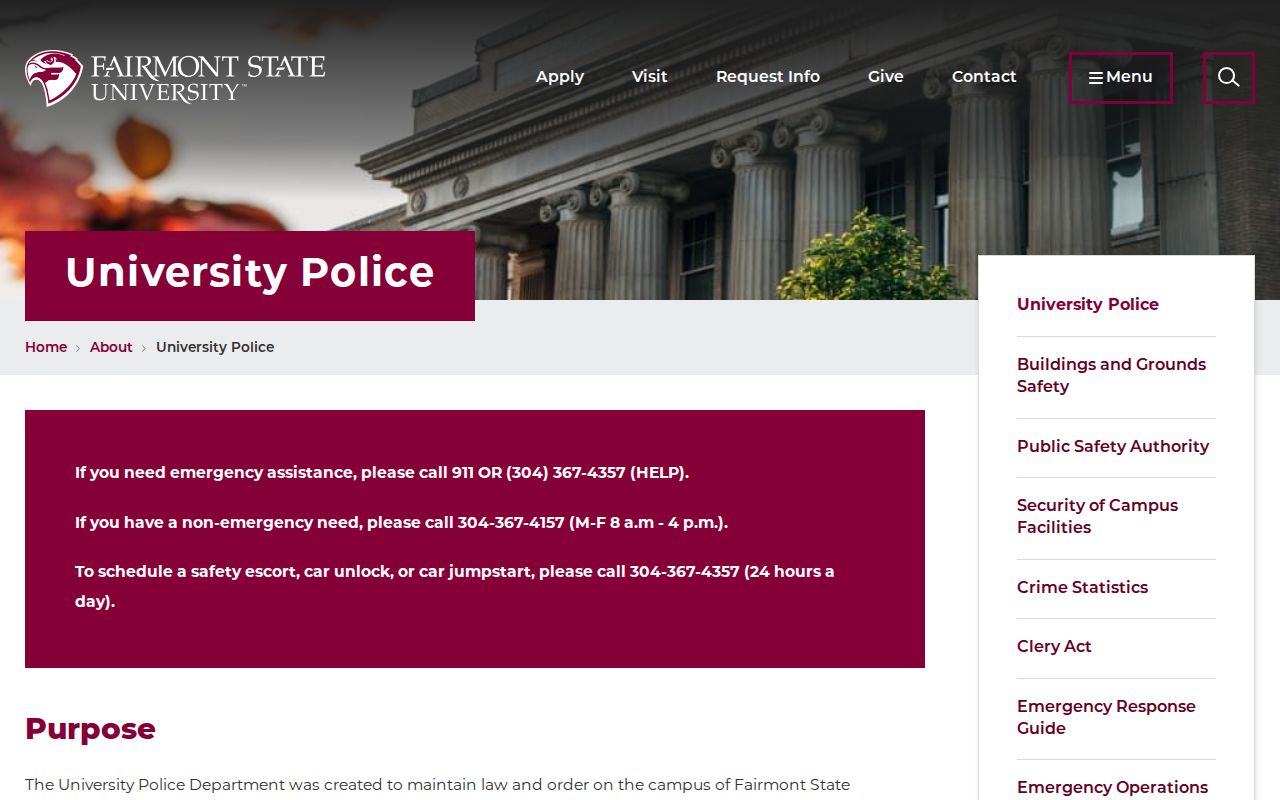
The campus source shows why agency identity matters within Fairmont: a university record request must begin with University Police even when a later state charge appears in a Marion court.
Fairmont Municipal Court Records
Fairmont Municipal Court hears city ordinance and limited traffic matters. It does not replace Marion Magistrate Court for state misdemeanors or the preliminary phase of a state felony. It also does not replace Circuit Court for an indicted felony. Call 304-366-9280 and press 3 for the municipal channel. Ask what search identifiers the clerk needs, whether the file is available at the counter, and what copy charge applies. No official online Fairmont municipal case portal or fee schedule was verified.
| Court Name | Fairmont Municipal Court |
|---|---|
| Case Types Heard | Fairmont ordinance matters and limited traffic cases within municipal jurisdiction |
| Case Lookup Channel | Municipal Court at 304-366-9280, press 3; no verified public city docket portal |
| What the Docket Shows | City citation or case identifiers, alleged ordinance or traffic matter, events, and recorded outcome where public |
| Copies & Fees | Confirm format, availability, and current cost directly; no official city schedule was located |
When the allegation cites West Virginia law instead of a Fairmont ordinance, start with the Marion Magistrate Case Record Search. A city police officer can make the arrest while the state charge proceeds entirely in county courts.
Fairmont Task Force Record Splits
Fairmont Police participation in the Three Rivers Drug Task Force illustrates a second jurisdiction split. A local investigation may involve Fairmont officers and later become a federal case in the Northern District of West Virginia. The task force's official U.S. Attorney contact is 304-366-0528. In that setting, the city may hold an originating report while the federal court docket is in PACER and federal prosecutors maintain their own filings. The Marion Circuit Clerk cannot supply a federal docket merely because the investigation began in Fairmont.
This is a practical comparison, not a claim that every task-force event becomes federal. Read the charging court named on the record. If the case is federal, the U.S. District Court Clerk in Clarksburg is the official court contact. If it remains a state matter, MCR and WVPASS are the proper court layers. The agency named on the report remains the source for whatever investigative portion is publicly releasable.
Where Fairmont Records End Up
A Fairmont arrest can generate several entries at different speeds. The city officer creates the report. Regional-jail staff create a booking record. A magistrate creates the complaint, initial appearance, and bond docket for many state charges. If a felony proceeds, it can move to the Marion County Circuit Court after preliminary processing and indictment. Clerks then report dispositions so the West Virginia State Police Central State Repository can match an outcome to the fingerprint-supported arrest cycle.
Record flow: Fairmont Police Department › Marion County Courts › West Virginia State Police Central State Repository
Each step answers a different question. A Fairmont police report explains the officer's recorded account. The booking shows custody at a point in time. The court file shows allegations and decisions. The repository assembles reported biometric cycles for the subject. If a final disposition is missing from your own WVSP history, contact the source court or agency and use the Form 136A challenge route rather than assuming the case stayed open.
Fairmont Record Data in Context
The official 2020 Census incorporated-place table counted 18,416 Fairmont residents and 9,045 housing units. Those figures explain why Fairmont is Marion County's largest municipal records producer, but population does not prove anything about an individual's conduct. Nor should it be used to create an unsupported crime ranking. The research did not locate complete-year agency crime totals for all three Marion cities.
For official crime trends, use the FBI Crime Data Explorer and confirm that the Fairmont Police agency-year includes all 12 reporting months. Partial reporting can make one year look far lower than another. Separate the resulting agency statistics from court and booking records. Crime counts describe reported agency activity; they do not identify the outcome of a specific Fairmont case.
Note: City population, agency crime totals, and a person's criminal record are three different measures and should never be treated as substitutes.
Fairmont Records During Office Disruptions
A June 2025 flash-flood emergency affected Marion County and caused structural damage in the area. The research does not establish that Fairmont records were lost or that any named office closed. It does support a sensible records step: verify access before travel during an emergency. Call Fairmont Police Records or the correct clerk, check the official city or Judiciary source, and ask whether the counter, telephone line, and electronic service are operating.
Online tools can fill part of the gap. MCR can show public Marion Magistrate case details, WVPASS covers public Circuit cases and documents from July 1, 1999 forward, and OIS shows current correctional information. None supplies the full Fairmont police narrative. A delayed counter visit should therefore be paired with a precise written request when the city office remains the legal custodian.
Public Access Rules
Fairmont Police records are subject to the West Virginia Freedom of Information Act, but public access has limits. A proper written request should identify the record and preferred format. Under §29B-1-3, the city must respond within five days, excluding weekends and legal holidays, by providing access, giving a production time, or denying the request with reasons. That is a response framework, not a promise that every Fairmont report will arrive in five days.
Court access follows Judiciary rules and confidentiality laws. Juvenile matters, sealed or expunged cases, protected victim facts, full personal identifiers, and confidential investigative content may not appear online. A missing Fairmont record can also be held by another custodian or exist only on paper.
Key Statutes:
W. Va. Code §29B-1-1 states West Virginia's public-access policy, subject to legal limits.
W. Va. Code §29B-1-3 sets the inspection, copying, and five-day response framework.
W. Va. Code §29B-1-4 protects specified investigative, personal, confidential, and security material.
Ask for segregable public portions when redaction is needed. For a certified court order, contact the clerk that maintains the case rather than relying on a screen capture.